
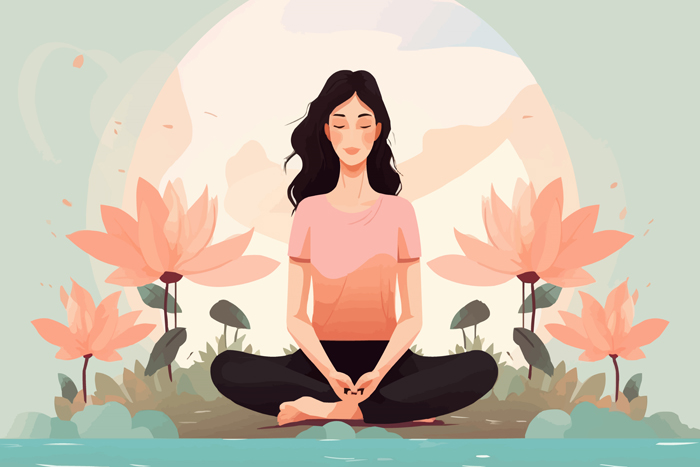
Spring tends to get framed as a time for big resets or fresh starts. In reality, it’s usually more inconsistent than that. Some days feel better, others don’t, and most fall somewhere in between.
Mental health works the same way!
There’s often pressure to feel “better” or to fix stress quickly, but most of the time it doesn’t happen like that. What’s more common is managing everyday ups and downs—stress from school or work, social pressure, lack of sleep, or just feeling off without a clear reason.
That’s where mindfulness and yoga can actually be useful, not as a trend, but as a practical tool.
Mindfulness is often misunderstood. It’s not about clearing your mind or forcing yourself to relax. It’s just noticing what’s happening while it’s happening. That might look like recognizing when your thoughts are spiraling, noticing tension in your body, or catching yourself before reacting in a way you might regret. It creates a small pause, and that pause can make a difference.
Without that awareness, it’s easy to go on autopilot—reacting quickly, shutting down, or pushing through stress without realizing how much it’s building.
Yoga supports that awareness through the body. Stress isn’t only mental—it shows up physically. Tight shoulders, headaches, shallow breathing, and low energy. Over time, those patterns can become normal.
Simple movement and breathing can help interrupt that. Not in an intense or complicated way—just enough to reset your system. Slowing your breath, stretching, or even taking a few minutes to move without distractions can help your body come out of a constant stress state.
This doesn’t require a full routine or a big-time commitment. Short, consistent actions tend to be more effective than occasional, longer efforts.
A few examples:
• Taking a few slow breaths before starting the day
• Standing up and stretching after sitting for a long time
• Stepping outside for a few minutes without your phone
• Noticing when your body feels tense and adjusting
None of these are dramatic, but they add up.
Another important piece is expectations. Mental health isn’t a straight line. Feeling okay one day and not the next is normal. It doesn’t mean something is wrong or that progress is lost.
The goal isn’t to feel calm all the time. It’s to be able to recognize what’s going on and respond in a way that doesn’t make things worse.
Mindfulness and yoga don’t remove stress, but they can make it easier to handle. They help build awareness, create small pauses, and support the body in coming out of constant tension.
Spring doesn’t automatically fix anything. It just creates a shift in environment. What actually makes a difference are the small, consistent habits that support how you feel day to day. Those habits don’t need to be complicated. They just need to be repeated!